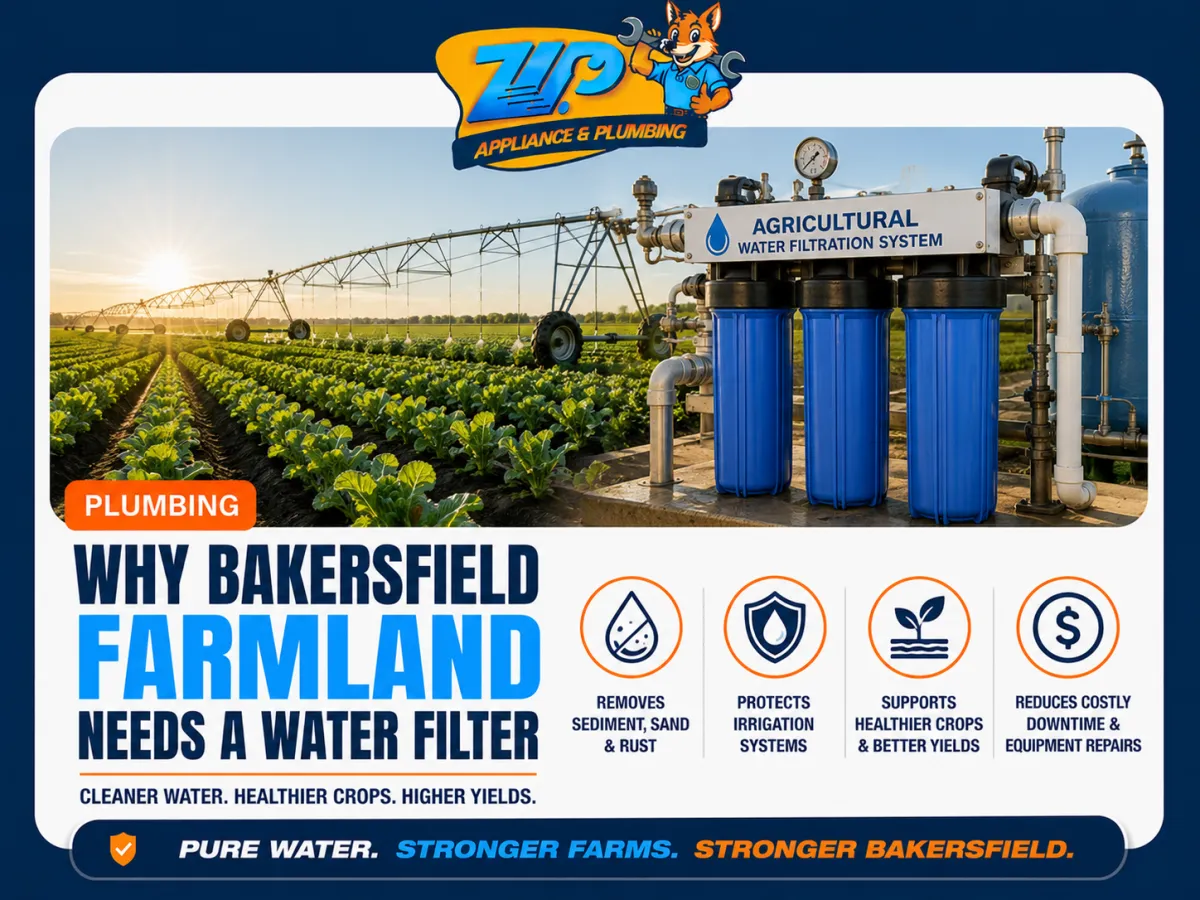
Why Bakersfield Farmland Needs a Water Filter
Home, Bakersfield Water, Farmland Living, Clean Drinking Water
Living Near Bakersfield Farmland? Here’s Why You Need a Water Filter
If you love the wide‑open views, fresh crops, and rural charm of farmland living around Bakersfield, you’re not alone. But there’s one part of the lifestyle many people overlook: what all that agriculture can mean for the water coming out of your tap. Even though Bakersfield water meets strict state and federal standards, there are compelling reasons to add a home water filtration system—especially if you live near fields, orchards, or dairies and care about long‑term health and truly clean drinking water. Local pros like Zip Does Plumbing can help you choose and install the right system for your home.
Bakersfield Water: Safe by Law, But Is It Your Ideal?
Let’s start with the good news. According to California Water Service’s 2024 reports, both the Bakersfield System and the City of Bakersfield domestic system tested thousands of samples and met all primary and secondary state and federal standards for drinking water. TapWaterData even gives the City of Bakersfield utility an A grade—100 out of 100—with no recorded violations in 2026. In other words, your Bakersfield water is considered legally safe when it leaves the treatment plant.
But there’s another side to the story. Independent groups that look beyond legal limits paint a more cautious picture. The Environmental Working Group (EWG) reports that the Bakersfield system has detected 41 contaminants—19 of them above its own, more conservative health guidelines. PurityMap ranks Bakersfield last among 25 California cities, with a purity score of 55 out of 100, citing hard water and the presence of PFAS “forever chemicals” at around 4.8 parts per trillion. These levels are still within federal limits, but they raise valid water quality concerns for families who want to go beyond “good enough” and aim for the cleanest drinking water possible at home. Choosing a whole-home water filtration setup and working with a trusted local plumber such as Zip Does Plumbing makes it easier to close that gap between “legal” and “ideal.”
📌 Key Takeaway in Real Life: One Bakersfield family on the southwest side noticed a strong chlorine taste and dry skin after showers, even though their annual report showed no violations. After installing a carbon filter and under-sink system with a local plumber, they reported better-tasting water and fewer skin issues—without changing their water provider.
How Farmland Living Affects Your Water Before It Reaches the Tap
Living near farmland in the southern San Joaquin Valley comes with unique water quality dynamics. Agriculture is the backbone of the region’s economy—but it’s also one of the biggest contributors to agricultural runoff, the mix of water, soil, and chemicals that washes off fields during irrigation or storms and ends up in rivers, canals, and eventually groundwater and municipal supplies.
A 2026 study on California groundwater found that when the share of land planted with high nitrogen‑leaching crops within 500 meters of a well increases by 10 percentage points, nitrate levels in that well rise by about 11.6% over the following decade. That’s a powerful illustration of how closely farmland living and groundwater quality are linked. It’s not an instant effect; it’s a slow, steady seepage that can quietly change what’s in your well or local aquifer over time.
Large environmental reports covering the Bakersfield area also point to stormwater and agricultural runoff as major sources of pollutants—pesticides, heavy metals, nutrients like nitrogen and phosphorus, and even zinc, copper, and arsenic—entering local waterways. Soil erosion, especially on tilled fields and sloped ground, carries sediment into canals and rivers, and that sediment often comes with attached contaminants. Even when the city does an excellent job treating water, the source water coming into the system is under constant pressure from surrounding farmland activity.
“We loved backing up to almond orchards, but we didn’t realize how much that landscape influenced our well. After a particularly wet winter, our nitrate test jumped and we decided to add reverse osmosis at the kitchen sink. It was a simple change that made us feel a lot safer about mixing baby formula and cooking at home.”
— Rural Bakersfield homeowner near the Kern River corridor
Agricultural Runoff 101: What Can End Up in Your Water?
Agricultural runoff is not just “dirty water.” It’s a complex cocktail of substances that can influence water quality in subtle and not‑so‑subtle ways. If you live on the outskirts of Bakersfield or near irrigated fields, here are some of the main categories to understand:
Nitrates from fertilizers: Nitrogen‑rich fertilizers help crops grow, but excess nitrogen can leach into groundwater as nitrate. Elevated nitrate levels are a well‑documented health concern, especially for infants and pregnant women, and they’re one of the most common agricultural contaminants in rural wells across California’s Central Valley.
Pesticides and herbicides: Chemicals used to control weeds and insects don’t always stay put. They can be carried off fields during irrigation or heavy rain and make their way into canals, rivers, and eventually drinking water sources. Some break down quickly; others linger in the environment for years.
Sediment and soil particles: Runoff often contains fine soil particles that cloud water and can transport attached metals and chemicals. While treatment plants remove most sediment, private wells and small systems may see more variation, especially after storms or changes in irrigation patterns.
Salts and minerals: The Bakersfield area has long used reclaimed wastewater for irrigation to manage soil salinity. While this practice supports farming, it also means that salts and nutrients are constantly cycling through the soil‑water system, contributing to the region’s hard water and mineral content. A dedicated water softening system can help reduce that mineral load before it reaches your fixtures and appliances.
None of this means your tap is automatically unsafe. It does mean, however, that if you live near active fields, dairies, or orchards, your water is part of a complex landscape where agricultural runoff plays a significant role—and where adding a water treatment system can give you an extra layer of protection and peace of mind.
💡 Pro Tip (From the Field): A small horse property east of Bakersfield installed a basic sediment and carbon system after noticing cloudy water following irrigation cycles on neighboring fields. The owner reported clearer water and fewer clogs in faucet aerators within weeks—simple proof of how much soil and debris can move with runoff.
Municipal vs. Private Wells: Different Paths, Similar Water Quality Concerns
If you’re inside Bakersfield city limits, your water likely comes from a blend of surface and groundwater treated by Cal Water or the city’s domestic system. Outside city boundaries—especially in rural pockets—you may rely on a private well or a small community system. The risks are slightly different in each case, but they share a common theme: source water is influenced by surrounding land use.
City or Cal Water customers: Your Bakersfield water is rigorously tested and treated, and current reports show full compliance with all drinking water standards. Still, independent assessments highlight PFAS, hardness, and other trace contaminants that treatment doesn’t always remove completely. A home filtered water system lets you fine‑tune water quality at the tap to match your personal health goals. If you’re unsure where to start, a quick call to Zip Does Plumbing can help you compare options for your specific neighborhood and plumbing setup.
Private well owners near farmland: You are your own water utility. Agricultural runoff and nitrate migration can have a direct impact on your well over time, and there’s no automatic testing unless you arrange it. For rural Bakersfield residents, regular water testing combined with a well‑chosen filtration system is one of the smartest investments you can make for your home.
💡 Pro Tip: If you use a private well near agricultural land, schedule a comprehensive water test at least every one to three years, focusing on nitrates, bacteria, and any chemicals used on nearby fields. Then pick a filter that specifically targets what your test reveals. A local expert like Zip Does Plumbing can help interpret your results and recommend the right solution.
Real-World Comparison: A north Bakersfield family on city water and a nearby rural family on a private well both installed filtration. The city family mainly noticed better taste and less scale on fixtures. The rural family saw nitrate levels drop from “borderline” to “non-detect” at the kitchen tap after adding RO—two different systems, but the same peace of mind.
Why a Water Filter Is Your Best Friend in Farmland Country
When you put all of this together—agricultural runoff, independent assessments of Bakersfield water, and the realities of farmland living—the case for home filtration becomes clear. A good filter doesn’t replace the city’s treatment; it builds on it, taking your water from legally safe to personally optimized. Here are some of the most important water filter benefits for Bakersfield residents near farmland:
Extra protection from PFAS and other trace chemicals: Reverse osmosis (RO) systems and advanced carbon filters can significantly reduce PFAS, many pesticides, and industrial chemicals that may slip through standard treatment but show up in independent testing databases.
Improved taste and smell: Hard Bakersfield water and disinfectants like chlorine or chloramine can leave a noticeable taste. High‑quality carbon filters polish your water so it’s more enjoyable to drink—encouraging better hydration for everyone in the household.
Defense against nitrate and fertilizer byproducts: For private wells or fringe areas where nitrate is a concern, RO and certain specialized systems can reduce nitrate levels, offering reassurance for families with babies or expecting parents.
Less scale and buildup in your home: A whole‑house filter and, if needed, a whole-home water softener can help manage Bakersfield’s hard water, protecting plumbing, appliances, and fixtures from mineral deposits while smoothing out the feel of water on skin and hair.
Case Study Snapshot: A Bakersfield couple near Stockdale Highway installed a whole‑house carbon filter plus RO at the kitchen sink. Within a few months, they saw fewer hard-water spots on shower glass, their coffee tasted better, and they stopped buying bottled water—saving money while cutting plastic waste.
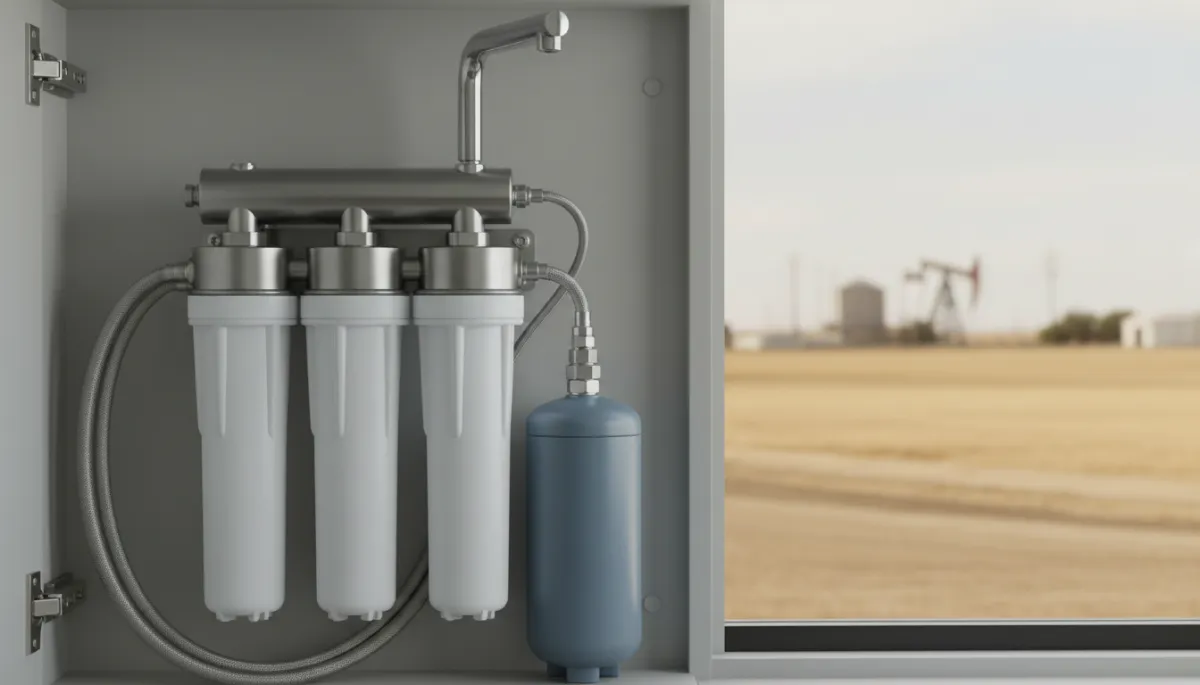
Adding under-sink filtration turns legally safe Bakersfield water into truly clean drinking water at the tap.
Choosing the Right Filter for Bakersfield Farmland Living
Not all filters are created equal, and the “best” system for your Bakersfield home depends on your specific water quality concerns and lifestyle. Here’s a straightforward way to think about it if you live near agricultural areas:
1. Whole‑House Filtration: Protecting Every Tap
A whole‑house system is installed where water enters your home, so it treats everything—kitchen, bathrooms, laundry, and outdoor spigots. For Bakersfield water, a high‑capacity carbon‑based system (like the widely recommended SpringWell CF1) can reduce chlorine, some PFAS, sediment, and many organic chemicals before they ever reach your pipes. This is especially valuable if you’re worried about agricultural runoff affecting shower water, cooking water, or even what you use to wash produce from your own garden. For expert installation and sizing, you can reach out to Zip Does Plumbing for a whole‑home assessment.
Real Bakersfield Example: A family with kids who swim daily noticed that their towels and clothes felt stiff and their shower doors were constantly spotted. After installing a whole‑house system, they reported softer laundry, clearer glass, and fewer calls to the plumber for scale‑related issues.
2. Reverse Osmosis for Drinking and Cooking Water
For the water you ingest directly—what you drink, cook with, and use for baby formula—reverse osmosis is one of the most effective options. Modern RO systems, such as the Waterdrop G3P800, AquaTru, or budget‑friendly models like the iSpring RCC7AK, can remove a broad spectrum of contaminants: PFAS, nitrates, lead, many pesticides, and microplastics. Pairing a whole‑house system with an under‑sink RO unit gives you a layered defense against both city‑level and farmland‑related contaminants.
“Once we installed RO at the kitchen sink, we stopped hauling home cases of bottled water. My coffee tastes better, and we feel better about what our kids are drinking—especially living so close to dairies and fields.”
— Southwest Bakersfield resident near agricultural land
3. Pitchers and Portable Filters for Extra Flexibility
If you rent near Bakersfield farmland or want a lower‑commitment option, advanced pitcher filters like Clearly Filtered or LifeStraw Home can still make a meaningful difference, especially for PFAS, heavy metals, and microplastics. For camping, field work, or emergencies, portable bottles such as the Grayl GeoPress can handle both biological and chemical contaminants in one step—handy if you ever need to rely on non‑standard water sources near canals or creeks.
📌 Key Takeaway: In Bakersfield’s farmland context, a smart setup is a whole‑house carbon filter for everyday use plus a reverse osmosis system at the kitchen sink for the cleanest possible drinking and cooking water. If you’d like help designing that setup, visit zipdoesplumbing.com to get started.
Renter-Friendly Story: A college student renting a room on the edge of town couldn’t modify the plumbing, so she opted for a high‑performance pitcher filter. It became the go‑to source for drinking water for everyone in the house—and an easy way to feel more confident about tap water without permanent changes.
Beyond Today: Long‑Term Water Quality Concerns in the Bakersfield Area
One reason many Bakersfield residents choose to install filters is not just what’s in the water now, but what could change in the next five, ten, or twenty years. Groundwater levels in the Central Valley are under stress from heavy pumping. Studies show that nitrate and other contaminants can take years to travel through soil and reach wells. Meanwhile, climate and water policy shifts—like efforts to restore flows in the Kern River—continue to reshape how water moves through the region’s farms and cities.
On the positive side, new approaches such as Managed Aquifer Recharge (MAR) are being explored to help replenish groundwater, and utilities like Cal Water are investing in infrastructure upgrades, including new mains and hydrants, to keep supplies reliable. But these big‑picture solutions take time, and they don’t change the fact that your home’s water ultimately reflects a complex mix of regional agriculture, infrastructure, and environmental conditions.
Long-View Example: A retired couple west of Bakersfield installed filtration not because of a current problem, but because they’d watched neighbors deal with changing well levels and nitrate issues over the years. Their goal was simple: lock in consistently clean drinking water now, instead of reacting later if conditions shift.
Simple Steps Bakersfield Farmland Residents Can Take Today
Find out who supplies your water. Check your bill or ask your landlord whether you’re on Cal Water, City of Bakersfield water, a mutual system, or a private well. This shapes what kind of testing and filtration makes the most sense.
Review the latest water quality report. For municipal customers, read the Consumer Confidence Report (CCR) from Cal Water or the city. Pay attention to contaminants that are present even if they’re below legal limits—those are areas where a home filter can help.
Test private wells regularly. If you live right next to fields, orchards, or dairies, ask a certified lab to test for nitrates, bacteria, and any pesticides commonly used nearby. Use the results to choose filters that specifically target what’s in your water.
Match the filter to your goals. Want better taste and fewer chemicals? A high‑quality carbon filter may be enough. Concerned about PFAS, nitrates, and a wide range of contaminants associated with agricultural runoff? Add a reverse osmosis at your kitchen sink.
Maintain your system. Even the best filter only works if you replace cartridges on schedule. Mark reminders on your calendar so your system continues to deliver the clean drinking water you installed it for, and have a pro check surrounding plumbing fixtures if you notice pressure changes or leaks.
Step-by-Step Success Story: One Bakersfield homeowner followed this exact list—checked their supplier, read the CCR, tested their well, and then called a local plumber. Within a month, they had a tailored filtration setup and a clear understanding of what their system was removing.
The Bottom Line: Enjoy Farmland Living with Greater Peace of Mind
Bakersfield is in a unique position: its water systems are fully compliant and carefully monitored, yet independent organizations still flag issues like hardness, PFAS, and other contaminants that sit in the gray zone between “legal” and “ideal.” Add in the realities of agricultural runoff, nitrate migration, and the long‑term pressures on Central Valley groundwater, and it’s easy to see why more Bakersfield homeowners and renters near farmland are turning to filtration as a practical, affordable safeguard.
You don’t have to give up the benefits of farmland living—the quiet nights, the open skies, the proximity to fresh produce—to feel confident about the water your family drinks every day. By understanding how Bakersfield water is shaped by agriculture, recognizing the key water quality concerns, and choosing a filter that fits your home, you can enjoy both the rural lifestyle you love and the clean drinking water you deserve.
In the end, a water filter is more than just another appliance. For Bakersfield residents living near farmland, it’s a simple, powerful way to take control of your water quality—so every glass you pour reflects your own standards, not just the minimum required by law. Pairing filtration with a targeted hard water treatment solution can also protect your pipes, appliances, and even your water heater from scale buildup over the long term.
📌 Real-World Bottom Line: From young families mixing formula to retirees protecting their health, Bakersfield residents near farmland are using filtration to bridge the gap between what’s “safe enough” on paper and what feels truly clean at home.
Ready to Upgrade Your Bakersfield Water?
If you live near Bakersfield farmland and want cleaner, better‑tasting water at every tap, the next step is simple. Visit Zip Does Plumbing’s water quality solution page or call (661) 370-2701 to schedule a consultation. The team at Zip Does Plumbing can review your water situation, explain your options, and professionally install a filtration system tailored to Bakersfield’s unique farmland conditions—so you can enjoy peace of mind every time you turn on the tap.