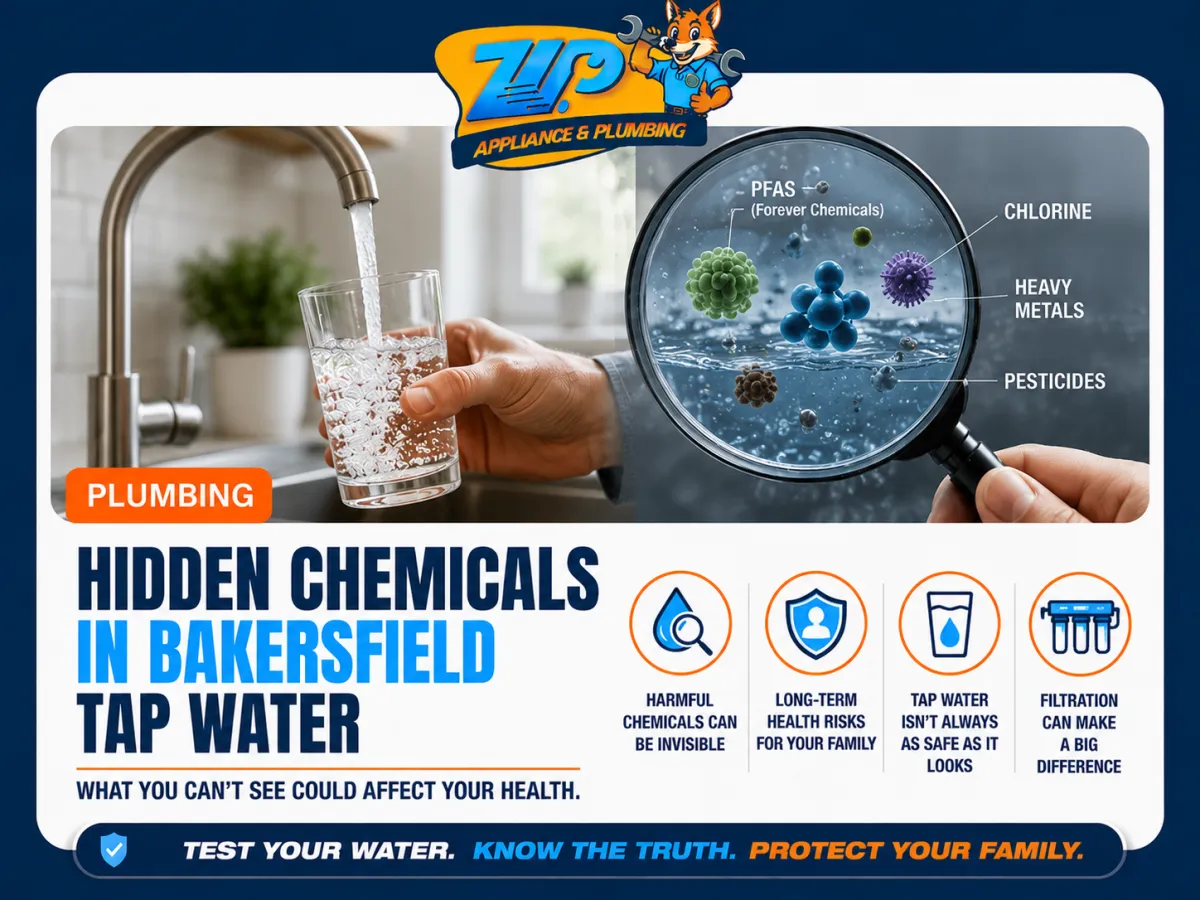
Hidden Chemicals in Bakersfield Tap Water
Water Quality, Residential Water Safety, Bakersfield Water
The Hidden Chemicals in Bakersfield's Tap Water: What Residents Need to Know
Bakersfield’s tap water is officially rated safe and compliant, yet independent health organizations say there may still be reason for residents to look closer. Here’s what Bakersfield families need to know about hidden contaminants, water quality reports, and how to protect residential water safety at home with the right water filtration system.
Bakersfield Water in 2026: Safe by Law, But Is It Safe Enough?
When Bakersfield residents hear about Bakersfield water , the first question is usually simple: “Is my tap water safe to drink?” According to recent state and federal data, the answer—on paper—is yes. The City of Bakersfield’s main public water system (PWS ID CA1510031) currently has an “A” quality score of 100/100 on TapWaterData, with no recorded violations of federal drinking water standards in 2026.
Recent sampling from March and April 2026 backs this up. Tests show arsenic, lead, chromium, mercury, nitrate, and other metals all below their legal Maximum Contaminant Levels (MCLs) in both the City of Bakersfield system and the California Water Service (CWS) system that serves parts of the city. On the surface, Bakersfield’s tap water appears to meet all regulatory expectations for water quality.
📌 Local Example: In early 2026, a Southwest Bakersfield neighborhood received a notice explaining that routine testing had detected a slight uptick in nitrates after heavy winter rains. While levels stayed below the legal limit, the utility temporarily adjusted treatment and increased monitoring—showing how real-world events like storms and runoff can briefly influence Bakersfield water quality even when overall scores remain “A” rated.
But for families focused on residential water safety , the story doesn’t end with legal compliance. Independent assessments, including the Environmental Working Group’s (EWG) Tap Water Database, paint a more complicated picture—one that involves hidden contaminants that may be present at levels above stricter health-based guidelines, even while staying under federal limits.
Legal Limits vs. Health Guidelines: Why the Numbers Don’t Always Agree
To understand the chemicals in Bakersfield’s tap water, it helps to know the difference between two key terms: Maximum Contaminant Levels (MCLs) and health-based guidelines such as Maximum Contaminant Level Goals (MCLGs) or EWG health benchmarks. MCLs are the legal limits set by the U.S. Environmental Protection Agency (EPA). Water utilities must keep contaminants below these levels or risk violations and fines. MCLGs and independent guidelines, on the other hand, are typically based on the latest health research and often aim for the level at which no expected health risk exists over a lifetime of exposure.
In Bakersfield’s case, the city’s water meets all current EPA standards, but groups like EWG report dozens of contaminants detected at levels above their more protective health guidelines. Between April and June 2024, EWG’s analysis found 41 contaminants in the City of Bakersfield system, with 19 exceeding EWG health-based limits. This contrast—“safe by law” but “concerning by health standards”—is at the heart of the hidden chemicals conversation.
“When Bakersfield homeowners bring us their Consumer Confidence Reports, they’re often surprised that a system with no violations can still show dozens of detected contaminants. Once we walk through the difference between MCLs and health-based goals, the numbers suddenly make more sense—and so does their decision to add filtration at home.”
— Local Bakersfield plumbing and water treatment specialist
📌 Key Takeaway: Bakersfield water can be legally compliant and still contain contaminants that health advocates believe should be lower for maximum long-term safety, especially for children, pregnant people, and those with compromised immune systems.
The Hidden Chemicals in Bakersfield’s Tap Water
When people hear “hidden contaminants,” they often imagine something mysterious or rare. In reality, many of the chemicals detected in Bakersfield tap water are well-known substances that occur naturally or are byproducts of necessary treatment processes. The concern is not that they exist at all, but how much is present and how they may affect health over time. Here are some of the key contaminants that residents should be aware of.
Uranium and Other Radioactive Elements
EWG reports that Bakersfield’s drinking water has contained uranium at levels around 1.81 pCi/L , which is about 4.2 times higher than their health guideline of 0.43 pCi/L—but still under the EPA’s legal limit of 20 pCi/L. Uranium and related “gross alpha” radioactivity often come from natural deposits in the earth, especially in regions with certain rock formations. Long-term exposure, even at low levels, can increase cancer risk and may impact kidney function.
💡 Real-World Context: In one Bakersfield-area well field near agricultural land, state sampling in recent years showed naturally occurring uranium creeping upward as groundwater levels dropped during drought. The well remained in use because readings stayed below the EPA limit, but the utility blended that water with cleaner sources to keep overall system averages lower—an example of how “hidden” radioactivity is managed behind the scenes.
Arsenic: Naturally Occurring, Still Concerning
Arsenic is another contaminant of concern in Bakersfield water. Official 2026 sampling from the City of Bakersfield shows arsenic levels around 2.4 µg/L (2.4 ppb), well below the EPA limit of 10 µg/L. However, EWG’s health benchmark for arsenic is much stricter—just 0.004 ppb. Their data has shown average levels in some Bakersfield-area supplies several hundred times higher than the guideline, though still beneath legal standards.
Long-term arsenic exposure has been linked to skin, bladder, and lung cancers, as well as cardiovascular and neurological effects. While the levels in Bakersfield tap water are not considered acutely dangerous, they are a good example of why, especially health-conscious residents, often choose additional filtration at home, such as a dedicated water treatment system at the kitchen sink.
📌 Bakersfield Case Study: A family in the 93311 ZIP code reviewed their CCR and noticed arsenic listed near the middle of the allowable range. After comparing it with EWG’s much lower guideline, they installed an under-sink reverse osmosis system. Follow-up lab testing of their kitchen tap showed arsenic levels reduced to non-detectable, giving them added peace of mind for their children’s drinking water.
Nitrates: A Risk for Infants and Vulnerable Groups
Nitrates commonly enter drinking water through agricultural runoff, fertilizers, and septic systems. In Bakersfield, 2026 testing shows nitrate at about 1.6 mg/L in a CWS well, well under the state MCL of 10 mg/L. Yet EWG’s health guideline is just 0.14 mg/L, and area-wide averages over several years have exceeded that benchmark multiple times.
High nitrate levels are especially dangerous for infants, as they can contribute to “blue baby syndrome,” a condition that affects the blood’s ability to carry oxygen. While Bakersfield’s current levels are far below that immediate risk zone, families with newborns often prefer to be extra cautious and rely on filtered or alternative water for formula preparation.
“After our pediatrician mentioned nitrates, we checked our Bakersfield CCR and saw they were well below the legal limit. Even so, we switched to using RO-filtered water for our baby’s formula. It was a simple change that helped us feel much more comfortable.”
— Young Bakersfield parent, Southwest Bakersfield
Disinfection Byproducts: TTHMs and Haloacetic Acids
Chlorine and other disinfectants are essential to kill disease-causing microbes in tap water. But when disinfectants react with organic matter, they can form disinfection byproducts (DBPs) , including total trihalomethanes (TTHMs) and haloacetic acids. In Bakersfield, EWG reports TTHMs at around 11.3 ppb, which is safely below the EPA MCL of 80 ppb but about 76 times higher than EWG’s health guideline of 0.15 ppb.
Long-term exposure to elevated DBPs has been associated with an increased risk of certain cancers and possible reproductive issues. Again, Bakersfield water is legally in the clear here, but residents who want to minimize exposure often look to point-of-use filters that are certified to reduce TTHMs and related compounds as part of a comprehensive filtered water system.
💡 Neighborhood Example: A Bakersfield homeowner near the Kern River Parkway noticed a strong chlorine taste during the summer months when water demand was highest. After installing an NSF-certified carbon filter at the kitchen sink, follow-up testing by a local lab showed a significant drop in TTHMs and a noticeable improvement in taste and odor.
PFAS “Forever Chemicals” and 1,2,3‑TCP
Two of the most talked-about hidden contaminants nationwide are PFAS (per- and polyfluoroalkyl substances) and 1,2,3‑trichloropropane (1,2,3‑TCP). In Bakersfield, EWG’s data indicates PFOS, a type of PFAS, was detected at approximately 0.928 ppt, about 3.1 times higher than their health guideline of 0.3 ppt, though still below proposed federal limits. 1,2,3‑TCP, a likely human carcinogen historically used as a soil fumigant, has been detected at levels roughly 5.9 times above EWG’s benchmark.
These chemicals are concerning because they can persist in the environment and the human body for long periods. While Bakersfield’s main systems are working to monitor and reduce these contaminants, they are prime examples of why many residents are turning to advanced filtration like reverse osmosis to further safeguard their homes.
📌 Kern County Case Study: When 1,2,3‑TCP was added to California’s list of regulated contaminants, several Kern County systems—including those serving parts of Bakersfield—had to install new treatment equipment or blend water sources to comply. Homeowners in affected zones who added RO systems at their kitchen sinks saw lab-confirmed reductions of 1,2,3‑TCP and PFAS to near or below detection limits, complementing the city’s efforts at the treatment plant.

Reviewing local water reports and using certified filters adds a crucial safety layer at home.
What Bakersfield Residents Need to Know About Their Tap Water
For anyone concerned about residential water safety in Bakersfield, it’s important to understand not only what’s in the water but also how to interpret the wide range of reports and data sources available. Here are the essentials every household should keep in mind.
1. Your Water Is Regulated — But Standards Evolve Slowly
Bakersfield’s main water utilities are closely monitored by state and federal agencies. Routine testing in 2026 shows no exceedances of current MCLs for major contaminants like arsenic, lead, chromium, mercury, and nitrates. That is reassuring and means your water is unlikely to pose immediate, acute health hazards under normal use.
However, many federal drinking water standards were set years ago and have not always kept pace with the latest scientific research. That’s why organizations like EWG often recommend more stringent levels for certain contaminants. For residents, this means that “meets standards” is a helpful baseline—but not necessarily the final word on optimal water quality .
💡 Local Policy Example: When California adopted a state standard for 1,2,3‑TCP ahead of federal action, Bakersfield utilities had to upgrade treatment and re-evaluate older wells. This is a real-world reminder that regulations can change as new science emerges—so staying informed each year is critical.
2. Water Quality Can Vary by Neighborhood and Provider
Bakersfield is served by multiple water systems, and water quality can vary depending on which utility or well field serves your address. For example, TapWaterData’s broader analysis of Bakersfield-area systems, including smaller providers, found 12 contaminants above EPA health-based goals and 92 recorded MCL “violations” across systems serving nearly half a million people.
ZIP-code level data, such as for 93311, has shown elevated levels of arsenic, gross alpha activity, lead, nitrate, and certain disinfection byproducts in the worst-case samples. While these may not represent every home, they illustrate why it’s crucial to know exactly which system you’re on and to review its specific reports.
📌 Neighborhood Comparison: A Bakersfield duplex on the east side and a single-family home in the southwest compared their CCRs and discovered they were on different systems with different source wells. While both met legal standards, one report showed higher arsenic, and the other higher TTHMs. Each household chose a slightly different filtration setup based on their specific water profile, with one family opting for a whole-home water filtration upgrade.
3. How to Read Your Consumer Confidence Report (CCR)
Every year by July 1, your water provider must publish a Consumer Confidence Report (CCR) summarizing test results, detected contaminants, and whether any violations occurred. For Bakersfield, the 2026 CCR may not yet be posted, but the 2024 and 2025 reports are typically available on your utility’s website or by request.
Look for tables listing each contaminant, its average level, and the range detected.
Compare these numbers to both the MCL and, if you wish, independent guidelines like those from EWG.
Pay special attention to contaminants linked to long-term health effects: arsenic, uranium, nitrates, DBPs, PFAS, and 1,2,3‑TCP.
💡 Pro Tip: Keep a copy of your latest CCR and compare it with independent databases like EWG and TapWaterData. Differences don’t mean anyone is “wrong”—they reflect different safety goals.
Practical Steps to Improve Residential Water Safety in Bakersfield
Knowing that tap water chemicals exist at low levels is only the first step. The next question for Bakersfield residents is: “What can I actually do about it?” Fortunately, there are clear, practical steps you can take to improve residential water safety without needing a chemistry degree.
1. Confirm Your Water Source and Service Area
Start by confirming which utility serves your address—City of Bakersfield, CWS Bakersfield, or another local provider. This information is usually on your water bill or your city’s website. Once you know your system name and ID, you can look up detailed data on:
Your utility’s official CCR
State sampling results via California’s Drinking Water Watch
Independent assessments on EWG and TapWaterData
📌 Real Bakersfield Example: A homeowner on Ming Avenue discovered through Drinking Water Watch that their house was supplied by a different well field than their office across town. That insight explained why their home water had a slightly higher mineral content and prompted them to choose a softening and filtration combo for the house, including a whole-home water softener for hardness and a point-of-use filter for drinking water, while their workplace relied only on simple carbon pitchers.
2. Consider Independent or At-Home Water Testing
If you want a clearer picture of what’s coming out of your tap, consider water testing at the household level. Options include:
Certified laboratory testing: Provides the most accurate and comprehensive results for metals, nitrates, PFAS, and more.
Home test kits: Useful for screening common issues like lead, hardness, or basic chemistry, though typically less precise than lab tests.
Testing is especially valuable if you live in an older home with aging plumbing, rely on a private well, or have particularly vulnerable household members, such as infants or older adults.
“We sent a sample from our 1960s Bakersfield home to a certified lab after noticing rust-colored staining. The report showed elevated iron and slightly higher lead at the tap—likely from our own plumbing, not the city supply. Installing new fixtures and a point-of-use filter at the kitchen sink brought those numbers back down.”
— Longtime Bakersfield homeowner, Central Bakersfield
3. Choose the Right Filtration for Bakersfield Water
Not all filters are created equal. To address the hidden contaminants found in Bakersfield, look for NSF-certified filters that specifically list the contaminants they reduce. Common options include:
Activated carbon filters (pitcher, faucet, or under-sink) to reduce chlorine, many DBPs like TTHMs, and some organic chemicals.
Reverse osmosis (RO) systems for a broader range of contaminants, including arsenic, uranium, nitrates, PFAS, and 1,2,3‑TCP, depending on certification.
Whole-house systems for addressing chlorine, sediment, and some contaminants at every tap and shower in the home.
📌 Key Takeaway: Match your filtration choice to the actual contaminants in your water. A basic carbon filter is helpful, but a reverse-osmosis system may be more appropriate if you’re focused on arsenic, uranium, nitrates, PFAS, or 1,2,3‑TCP. Pairing RO with a dedicated water softening system can also address Bakersfield’s common hard water issues that affect fixtures and appliances.
💡 Bakersfield Success Story: A North Bakersfield household with concerns about PFAS and 1,2,3‑TCP installed an under-sink RO system after reviewing EWG and TapWaterData entries for their system. A follow-up independent lab test of their filtered tap showed marked reductions in both contaminants, plus noticeable improvements in taste and clarity.
4. Simple Habits That Also Help
Alongside filtration, a few everyday habits can further improve residential water safety :
Flush stagnant water: Let cold water run for 30–60 seconds in the morning to clear water that has been sitting in pipes, especially in older homes where lead solder may be present.
Use cold water for cooking and drinking: Hot water can leach metals more readily from pipes and fixtures.
Maintain your filter: Replace cartridges on schedule; clogged or expired filters can become less effective or even harbor bacteria.
📌 Everyday Bakersfield Example: A downtown apartment tenant began flushing taps each morning and switched to using only cold, filtered water for cooking. Within a few weeks, they noticed fewer mineral deposits on their kettle and improved taste—simple habits that supported their filtration system’s performance and reduced strain on their water heater by limiting hard water buildup.
Bringing It All Together: A Balanced View of Bakersfield Tap Water
Bakersfield’s tap water story is nuanced. On one hand, the city’s primary systems are fully compliant with current EPA standards, with recent 2026 tests showing key contaminants like arsenic, lead, chromium, mercury, and nitrates well below legal thresholds. For many residents, this means turning on the tap is unlikely to pose immediate health dangers, and the water is safe for everyday use by regulatory measures.
On the other hand, independent analyses reveal that hidden contaminants —including uranium, arsenic, nitrates, disinfection byproducts, PFAS, and 1,2,3‑TCP—are present at levels that exceed more conservative health guidelines, even while remaining under federal limits. For households with infants, pregnant family members, or anyone simply aiming for the lowest possible long-term risk, it makes sense to look beyond “legally safe” and toward “health-optimized” water quality.
Ultimately, protecting residential water safety in Bakersfield comes down to informed choices:
Stay up to date with your utility’s Consumer Confidence Report.
Compare official data with independent sources like EWG and TapWaterData for a fuller picture of Bakersfield water.
Consider water testing at home, especially if you have vulnerable family members or older plumbing.
Invest in NSF-certified filtration tailored to the contaminants that matter most to you, whether that’s a focused kitchen water quality solution or a full home upgrade.
Clean, safe drinking water is one of the most important foundations of a healthy home. By taking a closer look at the tap water chemicals in Bakersfield and making thoughtful choices about testing and filtration, residents can move from uncertainty to confidence—knowing they’ve done everything practical to protect their families and raise the standard of water quality inside their own front door.
Take the Next Step Toward Safer Water at Home
If you’re ready to improve your home’s water quality, the team at Zip Does Plumbing can help you choose and install the right filtration and plumbing solutions for your Bakersfield home—from a targeted water filtration system to a whole-home water softener installation that tackles hard water at every tap. Call us today at (661) 370-2701 or visit https://zipdoesplumbing.com/ to schedule a consultation and get expert, local support for your residential water safety needs.