Understanding Disinfection Byproducts in Bakersfield Water
Water Quality, Disinfection Byproducts, Bakersfield Water
What Are Disinfection Byproducts — And Are They in Your Bakersfield Water?
If you live in Bakersfield, you likely trust that the water flowing from your tap is safe. Yet terms like “Disinfection Byproducts,” “chlorine byproducts,” and “TTHMs” can appear in water quality reports and raise understandable questions. This article explains what these substances are, how they relate specifically to Bakersfield water, and what they mean for your water safety and health.
1. What Are Disinfection Byproducts?
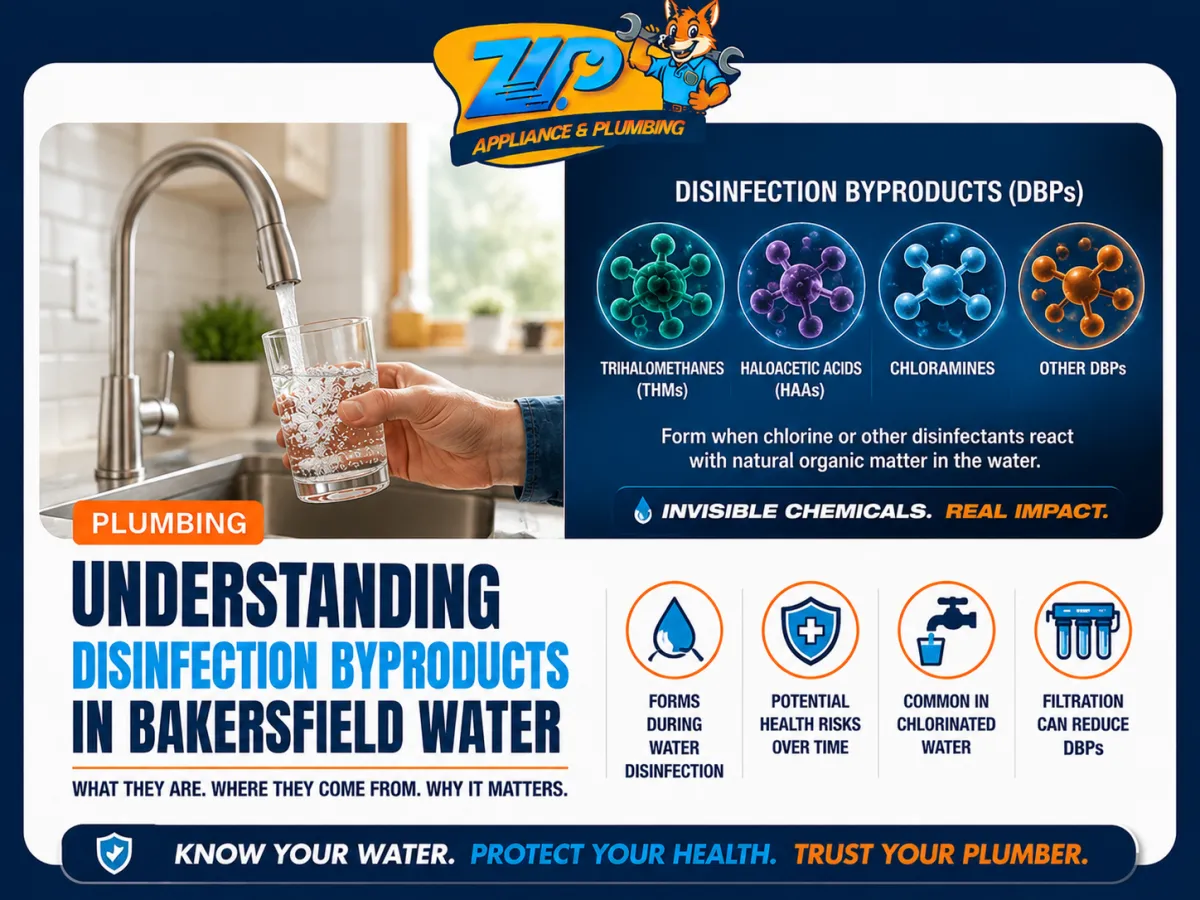
Disinfection Byproducts (often shortened to DBPs) are chemicals that form when disinfectants used to kill germs in drinking water react with natural organic material in the source water. In the United States, chlorine and chloramine are the most common disinfectants. They are highly effective at destroying disease‑causing microorganisms, but they can also create unintended chlorine byproducts in the process.
When leaves, soil particles, and other organic matter are present in rivers, reservoirs, or groundwater, they contain natural carbon‑based compounds. As water utilities add chlorine to ensure water safety, the disinfectant reacts with these compounds, forming new chemicals. These chemicals are collectively known as Disinfection Byproducts. The U.S. Environmental Protection Agency (EPA) and the Centers for Disease Control and Prevention (CDC) recognize dozens of DBPs, but two major regulated groups are:
Total Trihalomethanes (TTHMs) – a group that includes chloroform, bromodichloromethane, dibromochloromethane, and bromoform.
Haloacetic Acids (HAA5) – five haloacetic acids commonly measured together, such as dichloroacetic and trichloroacetic acid.
According to the CDC and World Health Organization, disinfection remains essential because it prevents serious waterborne diseases such as cholera, typhoid, and dysentery. The challenge is to balance microbial safety with the chemical risks from DBPs. That is why utilities and regulators set limits for these chlorine byproducts and monitor them closely as part of overall water quality management.
2. How Do Disinfection Byproducts Form in Bakersfield Water?
Bakersfield’s drinking water comes from a mix of surface water and groundwater. Surface water sources, such as rivers and canals, tend to carry more natural organic matter than deep groundwater. When this water is disinfected with chlorine, the conditions are right for Disinfection Byproducts to form. Factors that influence DBP formation include:
Amount of natural organic material in the source water (often higher in warmer months or after storms).
Chlorine dose and contact time – more chlorine and longer contact can increase DBP levels, up to a point.
Water temperature – warmer water generally encourages faster chemical reactions, including DBP formation.
Distribution system conditions – water age in pipes, storage tanks, and distance from the treatment plant.
Bakersfield’s hot climate and reliance on treated surface water in some areas mean that DBP formation is a real consideration. This does not automatically mean unsafe water, but it does mean that utilities must carefully manage treatment processes to keep Disinfection Byproducts within regulatory limits and as low as reasonably achievable for long‑term health protection.
3. Are Disinfection Byproducts in Your Bakersfield Water?
Based on recent data, the answer is yes, but at controlled levels. Multiple independent and official sources confirm that Disinfection Byproducts are present in Bakersfield water, as they are in most chlorinated municipal supplies across the country. The key question is not whether they exist, but at what levels and how those levels compare to regulatory and health‑based guidelines.
According to California’s State Water Resources Control Board database, the most recent DBP sampling for Bakersfield’s system (System No. 1510003) in July 2025 detected compounds such as chloroform, bromodichloromethane, bromoform, and dibromoacetic acid at levels below the laboratory reporting limit of 0.5 parts per billion (ppb). In practical terms, this means that these chlorine byproducts were present, but at such low concentrations that they were not quantifiable above the lab’s minimum detection threshold. This is consistent with full regulatory compliance.
Looking at longer‑term averages, the Environmental Working Group’s Tap Water Database, which compiles multi‑year data through 2023, paints a more nuanced picture. EWG reports average levels in Bakersfield of about 11.3 ppb for total trihalomethanes (TTHMs) and 36.2 ppb for haloacetic acids (HAA5). Both values are well below the EPA’s Maximum Contaminant Levels (80 ppb for TTHMs and 60 ppb for HAA5), meaning Bakersfield water met all federal water quality standards. However, these levels exceed EWG’s much stricter health‑based guidelines, which aim to reflect an ideal “no‑risk” or “minimal‑risk” scenario rather than legal requirements.
📌 Key Takeaway: Disinfection Byproducts are present in Bakersfield water at levels that meet all current federal and state standards, yet they are higher than some independent organizations’ health‑based advisory levels.
4. Bakersfield Water Quality: Compliance vs. Health‑Based Guidelines
To understand what these numbers mean for your household, it helps to distinguish between legal compliance and health‑based guidelines. According to TapWaterData, Bakersfield’s utility currently has an “A” grade and a 100/100 score for regulatory compliance, with no reported violations and all tested contaminants, including Disinfection Byproducts, within EPA limits. From a regulatory standpoint, Bakersfield water is considered safe to drink and meets all enforceable standards for water safety.
Independent organizations such as the Environmental Working Group and PurityMap take a more conservative approach. EWG’s analysis shows that Bakersfield’s TTHM levels are roughly 76 times higher than its own very strict guideline, and HAA5 levels are more than 300 times higher than its benchmark. PurityMap, which evaluates multiple factors including hardness, total dissolved solids, and emerging contaminants like PFAS, gives Bakersfield a relatively low overall score of 55 out of 100. These assessments do not imply that your tap water is unsafe in an immediate sense, but they do signal potential health risks over a lifetime of exposure, particularly for vulnerable groups.

5. Health Risks Linked to Chlorine Byproducts and DBPs
Research over the past several decades has explored how chronic exposure to Disinfection Byproducts may affect human health. While the evidence is still evolving, organizations such as the EPA, CDC, and World Health Organization recognize several potential concerns. It is important to note that these risks are generally associated with long‑term exposure at higher levels; they do not suggest that a single glass of Bakersfield water poses an acute hazard. However, understanding these health risks can help you make informed decisions about your drinking water.
Cancer Risk – Long‑term exposure to some DBPs, particularly certain trihalomethanes, has been associated with a small increased risk of bladder cancer in epidemiological studies. This association is one reason the EPA regulates TTHMs and HAA5 and periodically reviews the science to update standards as needed.
Reproductive and Developmental Effects – Some studies suggest a possible link between higher DBP exposure and reproductive issues, such as low birth weight or certain birth defects. The evidence is not conclusive, but it is strong enough that health agencies continue to monitor and study these potential effects, especially for pregnant individuals and infants.
Liver, Kidney, and Nervous System Impacts – Toxicological studies in animals have found that certain Disinfection Byproducts can affect the liver, kidneys, and nervous system at high doses. Regulatory limits are set with safety margins to keep human exposure well below levels observed to cause harm in laboratory settings.
Inhalation and Skin Exposure – DBPs are not only ingested. They can also be inhaled as water vapor during hot showers or absorbed through the skin. Some research suggests that showering and bathing can contribute meaningfully to total DBP exposure, which is why people particularly concerned about these chlorine byproducts sometimes consider whole‑house treatment solutions.
The World Health Organization emphasizes that the benefits of disinfection in preventing infectious disease vastly outweigh the potential risks from Disinfection Byproducts at levels typically found in treated drinking water. Nonetheless, for individuals seeking to further minimize long‑term risk, especially in areas like Bakersfield, where DBPs are measurable, reducing exposure where practical can be a reasonable precautionary step.
6. Balancing Water Safety and Chemical Risks
It is natural to wonder whether Bakersfield water is “safe” when you hear about Disinfection Byproducts, arsenic, PFAS, and other contaminants. The reality is more nuanced than a simple yes or no. From a regulatory perspective, Bakersfield’s tap water currently meets all state and federal requirements, including those for DBPs. That means it is considered safe to drink for the general population under existing laws and standards, and it plays a critical role in preventing waterborne illnesses.
At the same time, independent health‑based guidelines highlight that even legally compliant levels of Disinfection Byproducts and other contaminants may still carry some residual risk over a lifetime, especially for sensitive groups such as pregnant individuals, infants, the elderly, and those with compromised immune systems. This does not mean you must stop using Bakersfield water. Instead, it suggests that you may want to consider additional measures to further improve your personal water quality and reduce cumulative exposure to chlorine byproducts and other chemicals.
💡 Pro Tip: Think of regulatory standards as a baseline for community protection. If you want an extra margin of safety for your household, point‑of‑use filtration can be a practical next step. For help selecting and installing the right system for your Bakersfield home, you can contact the licensed plumbers at Zip Does Plumbing.
7. Practical Steps Bakersfield Residents Can Take
Review Your Local Water Quality Reports
Each year, water utilities are required to publish a Consumer Confidence Report (CCR) summarizing key water quality data, including Disinfection Byproducts. For Bakersfield residents, this report is typically available by July for the previous calendar year. Reviewing the CCR allows you to see actual measured levels of TTHMs, HAA5, and other contaminants in your area, often broken down by monitoring locations or system zones. If the 2026 report is not yet posted, you can consult the most recent 2024–2025 reports or contact your utility directly for the latest updates.
Consider Home Filtration for Disinfection Byproducts
If you are concerned about Disinfection Byproducts in Bakersfield water, point‑of‑use filtration is one of the most effective ways to reduce them. Technologies that can significantly lower DBP levels include:
Activated Carbon Filters – Pitcher filters, faucet‑mounted units, and under‑sink systems that use high‑quality activated carbon can adsorb many chlorine byproducts, improving taste and odor while reducing TTHMs and HAA5. Look for products certified to NSF/ANSI standards 42 and 53 for chemical reduction. If you’re unsure which setup is right for your kitchen or bath, consider scheduling a consultation with a professional from Zip Does Plumbing.
Reverse Osmosis (RO) Systems – Under‑sink RO units push water through a semi‑permeable membrane and often include carbon pre‑ and post‑filters. They can remove a broad range of contaminants, including Disinfection Byproducts, PFAS, and some metals. RO systems waste some water in the process, but they provide a high level of purification for drinking and cooking uses.
Whole‑House Carbon Systems – For households particularly concerned about DBP exposure via showers and baths, whole‑house carbon filtration can reduce Disinfection Byproducts at the point where water enters the home. This can decrease inhalation and skin exposure, though these systems require professional installation and regular maintenance. You can learn more about whole‑home water solutions and request an estimate directly from Zip Does Plumbing’s website.
Everyday Habits to Support Water Safety
In addition to filtration, simple daily practices can help you manage potential health risks from Disinfection Byproducts and other contaminants in Bakersfield water:
Use cold tap water for drinking and cooking, since hot water can dissolve more metals from pipes and fixtures. Heat water on the stove if needed.
Let water run for 30–60 seconds after long periods of non‑use, such as first thing in the morning, to flush standing water from household plumbing.
Stay informed about utility upgrades, such as the addition of granular activated carbon treatment for PFAS or process changes that may also affect Disinfection Byproducts.
8. Putting It All Together: What Bakersfield Residents Should Know
Disinfection Byproducts are an almost unavoidable consequence of using chlorine and similar disinfectants to protect public health. In Bakersfield, as in most U.S. cities, these chlorine byproducts are present in tap water but are carefully monitored and controlled. Current data show that Bakersfield water meets all federal and state standards for DBPs and other regulated contaminants, which means it is considered safe to drink for the general population under existing regulations.
At the same time, independent organizations that apply more protective, health‑based guidelines highlight that Disinfection Byproducts, arsenic, PFAS, and other substances in Bakersfield water may be present at levels higher than their ideal benchmarks. Over a lifetime, and especially for vulnerable individuals, these exposures could contribute to a small but real increase in certain health risks, such as bladder cancer or reproductive effects, according to studies summarized by the CDC, EPA, and World Health Organization.
Ultimately, the decision about how to respond is personal. Some Bakersfield residents are comfortable relying on the city’s treatment systems and regulatory oversight. Others choose to add an extra layer of protection with home filtration, particularly for drinking and cooking water. What matters most is that you are informed: you understand what Disinfection Byproducts are, how they form in Bakersfield water, what the scientific community currently knows about their potential effects, and what practical options you have to reduce your exposure if you wish.
If you have specific concerns—such as pregnancy, a chronic health condition, or questions about your neighborhood’s pipes—consider discussing your situation with a healthcare professional and reviewing your most recent Consumer Confidence Report in detail. Combining reliable public information with targeted steps at home is the most effective way to take control of your water safety and ensure that the water you and your family drink every day aligns with your comfort level and health priorities.
📌 Key Summary: Bakersfield’s tap water meets all legal standards and plays a vital role in preventing disease, yet trace levels of Disinfection Byproducts and other contaminants still exist. If you want greater peace of mind, adding targeted home filtration is a practical way to reduce long‑term exposure while still benefiting from reliable municipal water.
Ready to Improve Your Bakersfield Water?
If you’re considering a filtration system, softener, or a full home plumbing check to address Disinfection Byproducts and other water quality concerns, the local experts at Zip Does Plumbing are here to help. We serve Bakersfield homeowners with professional installation, maintenance, and repair services tailored to our region’s unique water conditions. You can also explore our dedicated water filtration services page for more details on filtration options.
Visit https://zipdoesplumbing.com/ to explore your options and request an appointment, or call us directly at (661) 370-2701 to speak with a friendly member of our team about your water in Bakersfield.
🚀Don’t wait for the next water report to decide how you feel about your tap. Schedule a visit with Zip Does Plumbing today to test your water, review filtration options, and design a solution that fits your home and budget. A quick call to (661) 370‑2701 or a visit to zipdoesplumbing.com is all it takes to start enjoying cleaner, more confident drinking water in Bakersfield.